“Man was designed by God to be His agent for the glorification of the world. As men matured in their tasks, however, they themselves would grow from glory to glory, as prophets, priests, and kings. Though sin sought to wreck God’s design, through Jesus Christ we have been put back on track. May God raise up a generation of mature Christians who can see the world as it truly is, and serve it according to His will.”–jAMES b. jORDAN[1]
INTRODUCTION:
The popular view regarding the Great Commission of Jesus Christ is that the disciples are tasked with “making [more] disciples” out of the nations, and in the process baptizing them and teaching them to obey Him, and then, the cycle is repeated again and again. That’s pretty much it. “You’re saved, now go save others. Share the gospel with them so that they don’t go to hell.” That particular understanding, while popular (and I will admit the nuances of how this is stated will vary from person-to-person), seems rather truncated to me. In other words, I don’t think it really grasps the whole picture. The gospel of Jesus isn’t just about personal salvation, and neither is our Christ’s Kingly Commission just about saving people from their sins. It is about glorifying every aspect of creation as far as the curse of sin is found in the refashioning of individuals and the communities in which they dwell into the image of Jesus. The king’s commission is about reconstructing the world of men—and the kingdoms in which they dwell—to recognize and bow the knee to the Lord of Glory, the ruler of the kings of the earth. A fulfilling application of “…thy will be done on earth as it is in heaven” (Matt. 6:10).
On the Mountain…
At the beginning of Jesus’ ministry—after His baptism by John in the Jordan River—He is led into the wilderness by the Holy Spirit to be tested for 40 days. And while, He is praying and fasting and being visited by a number of the angelic host He is also confronted by the devil. The devil seeks to tempt him. His desire is to get Jesus to sin. This is the opposite of when God tests us. God does it to prove our hearts, and more importantly prove to us and others that we are His.
Now it is the third test that I want to highlight. We read of Jesus being brought to a high mountain. We are not told the location of the mountain. And while standing on the top of this mountain he looks out and sees the kingdoms of this earth. As He surveys the world and the kingdoms of men, the devil says to Him,
“All these I will give you, if you will fall down and worship me” (Matt. 4:9; ESV).
Jesus’ response to the devil is immediate:
“Be gone, Satan! For it is written, ‘You shall worship the Lord your God and only Him shall you serve” (Matt. 4:10).
A word like a thousand pictures…
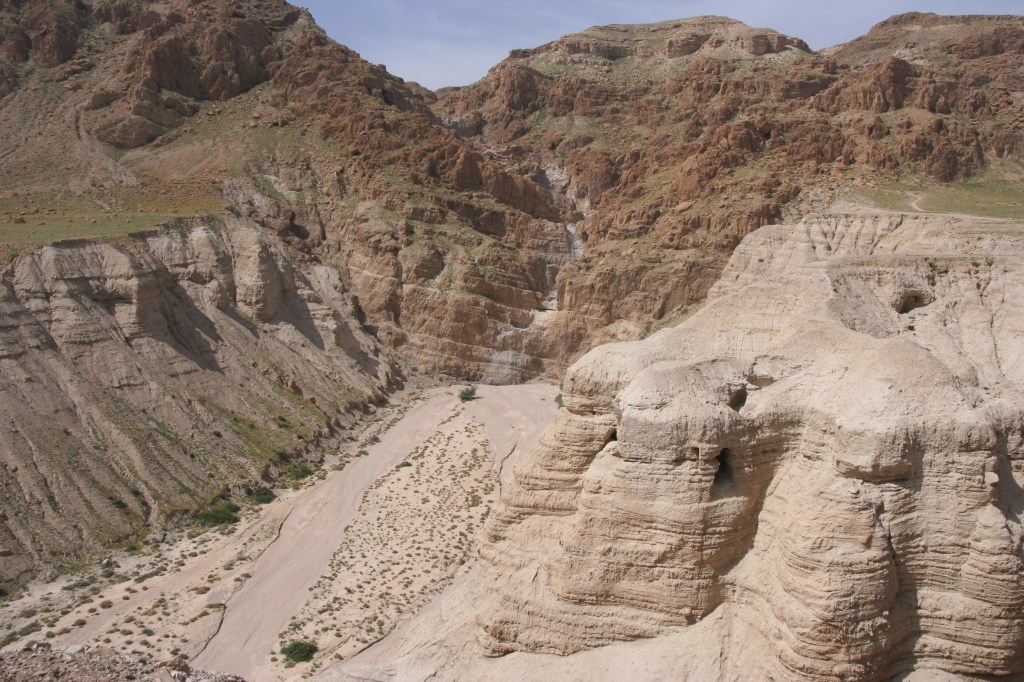
In Scripture many of the things we read about are meant to conjure up images in our mind.[2] The Bible is a piece of literature filled with material that is meant to paint a picture, stressing particular points along the way. When we think of what a mountain is various thoughts will enter our mind in relation to that word. Mountains are high and lofty, lifted above the earth touching the heavens. Mountains are made of rock and therefore appear as mighty fortresses or strongholds, a foundation where something might be built securely and where protection might be afforded. It should be no surprise then to learn that mountains are sometimes referred to as kingdoms or thrones or places of worship (i.e., the high places). When man approaches a mountain he is forced to look up in wonder and awe. He must come from below to reach that which above.
Jesus being brought to a high mountain and then shown the kingdoms of the earth means something: “One usurper king says to another born to be king, worship me and I will grant you these things.” For those that have “ears to hear,” to quote our Lord, we know that when Adam was created as God’s representative on the earth he was given dominion and authority. Adam was a kingly prince of God. But, he fell to the devil in the garden and his rightful place in God’s hierarchy was stripped from him. And so, for a time the children of Adam, because of sin, were placed under the rule of Satan. Jesus came into the world as God’s Anointed (Messiah, Christ) which is to say, His king. Jesus was born to rule, to have dominion. The devil offered Him one way—the way offered to Adam—to have dominion and rule. However, Jesus knew that to truly have dominion and authority, to truly rule in God’s place as His representative was to worship and obey Him.
The Final Mountain…
At the end of Jesus’ earthly ministry, after His resurrection and before His ascension, He called on His disciples—His representatives on the earth—to meet Him on the mountain. Again, we are not told the location of the mountain. We only know that the disciples of Christ knew the location. It is on this mountain that the King presents His commission to His own. He says,
“All authority in heaven and on earth has been given to me. Go therefore and make disciples of all nations, baptizing them in the name of the Father and of the Son and of the Holy Spirit, teaching them to observe all that I have commanded you. And behold, I am with you always, to the end of the age” (Matt. 28:18-20).
As the rightful King, proved in the crucible of God’s fire, having defeated, death, sin and Satan, Jesus speaks with the finality of the one approved by God the Father to rule in heaven and on earth. In another place we are told that God shares His glory with no one else (cf. Isa. 42:8; 48:11), but here we find that Jesus shares not only in the glory of the Father, but also His authority and power. And if we were to look at Revelation 1 we read this,
“…Jesus Christ the faithful witness, the firstborn of the dead, and ruler of the kings on earth. To him who loves us and has freed us from our sins by his blood and made us a kingdom, priests to his God and Father, to him be glory and dominion forever and ever. Amen” (Rev. 1:5-6).
Purpose of the King’s Commission…
The verb of Matthew 28:19 (matheteuo) which offers imperative force to the rest of the activity described therein is “Make Disciples.” Within that kingly commission there is the charge to “Go”, to “Baptize,” and to “Teach.” Although those terms are not verbs of the subject (they are participles), they do carry the same force of the verb because they offer depth and meaning to how one is to fulfill the command being given to them.
It is argued that this is only personal or individualistic in nature. Why? So as to deny the responsibility and/or possibility of its corporate impact. What do I mean? You get saved and your life changes. You are saved from hell and eternal heaven is your promised reward with God. For many that is where the buck stops, until they repeat the “disciple making” process once more. But that is not all that happens in that moment. From that moment on your life begins to be reconstructed into the image of Christ Jesus, and that has a reciprocal effect. It acts like leaven in the dough of the world of men (cf. Matt. 13:13).
Disciples of the Nations…
A person gets saved, their sins are forgiven, and they’ve become a new creation in Jesus Christ through the transformative power of the Holy Spirit by the will of the Father, and then what? What happens next? Does the transformation stop there? Does the process of glorification stop there? Does the sanctification of the individual stop there? No. The process is ongoing as the individual in question is renewed in their mind through the Word of God under the Holy Spirit’s guidance (cf. Rom. 12:2; 2 Cor. 4:16; Tit. 3:5-6).
True disciples of Christ abide in, and grow in the knowledge and wisdom of His Word (John 8:31-32). True disciples learn the Law-Word of God and like our Lord, out of love obey His commandments, just as He obeyed the Father’s commandments; “[every] jot [and] tittle” (Matt. 5:18; cf. John 14:15-24; 15:10).
What do we call a Christian disciple (man) who has married another Christian disciple (woman)? A Christian couple, or a Christian marriage. What of their children? A Christian family. What happens when many families in one community are also made into Christ’s disciples? What do we call that community of believers? A Christian community. What is a nation if not one large (the size will differ from one nation to another) conglomerate community? What happens when that culture is made up of Christian disciples? What do we call a nation that is made of Christian individuals and communities that desire to live by the cultural mandates described and laid out in Scripture?[3] Or perhaps better stated what do we call a society that has as its primary (original and/or foundational) concern the Christian faith? Is that nation not rightly described as a Christian Nation?
Is it possible that the desire of Christ’s Kingly Commission is not that just individuals are saved, but that the gospel of God spreads and permeates so much of the world, in a particular cultural context, that all learn to obey God and in so doing become Christian Nations? It seems to me that the King’s Commission recorded for us in Matthew 28:18-20 isn’t just concerned about individuals, but societies as a whole made up of many individuals that have learned to bow the knee to Jesus, having been baptized into the name of God (Father, Son and Holy Spirit), and likewise taught to obey His Law-Word in every area of life. There are those that deny the possibility of one Christian Nation, but I believe that the Bible teaches very clearly that all nations are to learn to “kiss the Son” (Psa. 2:12) each one becoming Christian Nations. Meaning that it is not a Western idea, but rather a Biblical idea.
“Arise, shine, for your light has come, and the glory of the Lord has risen upon you. For behold, darkness shall cover the earth, and thick darkness the peoples; but the Lord will arise upon you, and his glory will be seen upon you. And nations shall come to your light, and kings to the brightness of your rising. Lift up your eyes all around, and see; they all gather together, they come to you; your sons shall come from afar, and your daughters shall be carried on the hip. Then you shall see and be radiant; your heart shall thrill and exult, because the abundance of the sea shall be turned to you, the wealth of the nations shall come to you” (Isa. 60:1-5).
“The kingdom of the world has become the kingdom of our Lord and of His Christ; and He will reign forever and ever” (Rev. 11:15).
Closing Remarks...
The argument that the Great Commission, which I’ve taken the liberty in calling the King’s Commission, is only about making disciples of nations in individualistic/personal terms only addresses one portion of the truth of the charge given by Christ Jesus to His disciples. By all means “make disciples” and baptize them in them in the name of God (Father, Son, and Holy Spirit), and teach them to obey Christ in the same way that He obeyed the Father’s commands. But don’t think that is the end of the matter. The goal is all creation, not portions of it.
Jesus has authority over every nation and the heads of that nation. Christians are not only individual, but they are part of the whole. It is the whole of their world (oikoumene) that is the ultimate focus of the King’s Commission. Jesus has dominion and power over it all. He is sending forth His own to claim the territory that He paid the blood price for. While that may not fit into the schema of many Christian theological convictions, it is nonetheless the Biblical position presented to the children of God. The King’s Commission is an incremental infusion of His kingdom rule over and above all nations, meant to recognized by Him. Christian Nationalism therefore should not be seen as a singular notion, but one of plurality, and eventual outcome of the King’s Commission being realized in history.
ENDNOTES:
[1] James B. Jordan, Through New Eyes: Developing a Biblical View of the World (Brentwood, TN: Wolgemuth & Hyatt, Publishers, Inc., 1988), 141, PDF E-book.
[2] “Mountains and hills are a master image of the Bible, through which one can trace the whole course of biblical history and doctrine in microcosm. They are literal landscapes in which a broad spectrum of human activity occurs. As symbols they declare the nature of God. As the place where humans encounter the divine, they epitomize how God and people relate to each other, both in history and in the eschaton.” Leland Ryken, James C. Whilhoit, and Tremper Longman III, Dictionary of Biblical Imagery: An Encyclopedic exploration of the images, symbols, motifs, metaphors, figures of speech and literary patterns in the Bible (Downers Grove, IL: InterVarsity Press, 1988), 574.
[3] Here I speak of “holiness” and not in terms of music, literary, food, and clothing styles. Those are symbolic representatives of the culture behind the people, but they will differ in style from one nation to another. Where they will not differ is in terms of holiness. Holiness acts as the principle foundation of those stylistic differences, and those are formed on the basis of the ethical normal described in God’s Law-Word. Cf. Exodus 19:6; Leviticus 19:2; Deuteronomy 14:2; Ephesians 5:25-27; 1 Peter 1:14-16; Hebrews 12:10.


Leave a Reply