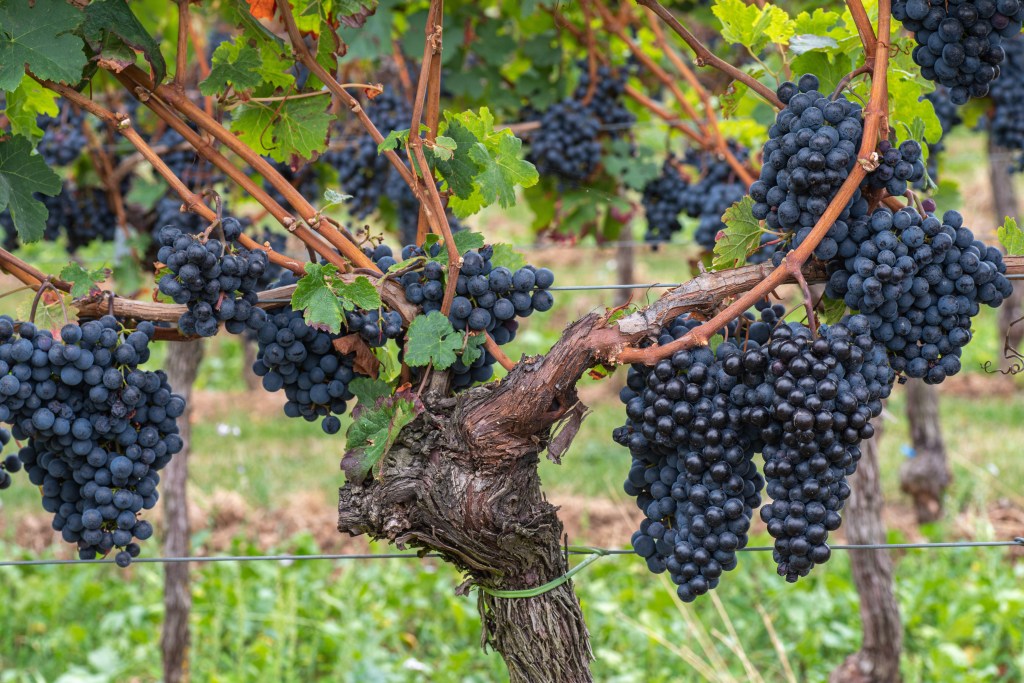
“I am the true vine, and my Father is the farmer [vinedresser]. Every branch in me that does not bear fruit, he takes away. Every branch that bears fruit, he prunes, that it may bear more fruit” (John 15:1-2; NHEB).
“You therefore, beloved, knowing these things beforehand, beware, lest being carried away with the error of the wicked, you fall from your own steadfastness. But grow in the grace and knowledge of our Lord and Savior Jesus Christ. To him be the glory both now and forever. Amen” (2 Pet. 3:17-18).
INITIAL THOUGHTS…
Read Scripture for very long and you will notice something about the characters presented in it… they are all sinners. They all fall short of the glory of God. They all, at various times and in various ways, fail to present the picture of perfect righteousness. There’s a reason. It is impossible for mankind to do such a thing. Mankind cannot be holy as the Lord God is holy, even though, we are commanded in both Testaments (Covenants) to do that very thing.
“Speak to all the congregation of the children of Israel, and tell them, ‘You shall be holy; for I the Lord your God am holy” (Lev. 19:2).
“But just as he who called you is holy, you yourselves also be holy in all your behavior; for it is written, ‘You shall be holy; for I am holy” (1 Pet. 1:15-16).
The requirement exists because of who God is—that’s of primary importance; and, because of who we are created to be—that’s of secondary importance. That one is primary and the other is secondary does not lessen the truth or lighten our load, so to speak. It is merely a truth that the Creator of all things has preeminence over all things, and we who were created to bear His image (His name) are held responsible for how well we do, or do not do that very thing.
So, we are created to be holy, we are told to be holy, and we fall short of that command. And, when we read through the Biblical account, the historical account of humanity from the point of view of the Holy Spirit as told through those whom He inspired to write those things down, we find various sins put on display. Some quite vile. Why? Why have His prophets write them down? Why not only tell of the good things that God’s people have done throughout history? Why not tell how God through His saving grace has redeemed fallen man and only hit the highlights? I can think of at least a couple reasons: 1) We need to hear the truth, not some veneered version of it; 2) We need to be reminded of who we are.
We are no better than anyone else in history. We all fall short. We all sin. And yet, this does not change the fact that throughout history there are those whom God has saved irrevocably, and those who have likewise been damned beyond redemption.
The reason we need to be reminded of what we are called to be versus what we truly are is so that we have no confidence in the flesh. None whatsoever. We have nothing to brag about. We are not better than another because of what we bring to the table, if there is a difference it is not because of us, it is solely because of Him.
We are told the truth of humanity so that when we soberly look at the lives of others that have gone before, mighty men and women of faith, that we do not falsely assume that we will surpass them in holiness or righteousness. We will not. We cannot. The only way that a man is holy or righteous before God is because of the application of Jesus, the Son of God, the Anointed One of God has applied His righteousness and holiness to us, on us, for us.
How He did it was in fulfillment of the same demand placed upon us. Jesus took on flesh as the Living Word, the 2nd member of the Holy Trinity, in order to pay the penalty for sin. His name means, “He will save His people from their sin” (Matt. 1:21; Yahew saves). How He did it was in fulfilling the legal requirements of the Law-Word of God. He did not bypass those laws, but honored them in death. The law requires the death of sin, and Jesus died because of sin. He offered Himself substitutionally on the cross (a tree) a symbolic reference to the curse of God for unholiness and unrighteousness, even though none of those things were ever found within Him. Jesus never had an unholy or unrighteous thought, word, or deed. He lived the perfect life.
When one considers this truth in light of the rest of what we read in Scripture regarding the entire human race, silence follows. It is an “awe…some” moment when the weight of that reality finally rests upon the mind/the conscience of those who are given eyes to see and ears to heart and a heart to respond. It becomes a Romans 3:19 moment,
“Now we know that whatever the Law says, it speaks to those who are under the Law, so that every mouth may be closed and all the world may become accountable to God; because by the works of the Law no flesh will be justified in His sight; for through the Law comes the knowledge of sin” (Rom. 3:19-20; NASB).
The law of God holds a mirror up to us and reveals that we are bankrupt. The instruction of God as given in His entire Law-Word shows that not one of our ancestors before Christ (or will there be after Him) lived a life that was holy, righteous and good.
Memorial Day…
Every year in the month of May here in the United States we celebrate the sacrifices that were given in the defense of this nation. Blood has been spilled on this soil by such men before this country had even declared her independence in the later 1700’s. If you look up a reference as to what this day is meant to be remembered for, you will read that it is a memorial to those who committed the ultimate sacrifice for what they believed was worth dying for and defending.
To be sure, there is no greater gift that one can give than to “lay down [a] life for [your] friends” (John 15:13). This is the highest gift that any of us living can give, our lives. Such a sacrifice is a sacrifice of love. But without diminishing those who have served to protect what they believe is good and right, there is only one who gave such a sacrifice in truly ultimate sense: Jesus of Nazareth. The Father sacrificed the Son, and the Son laid down His life for His sheep, but He did so not while they were sheep but goats. We are told in our Bibles that Jesus died for us not when we were his friends, or His family, or His sheep, but when we were His enemies, estranged from Him, when we where goats ready to be slaughtered. And that my friends is a true sacrifice of love,
“For if while we were enemies we were reconciled to God through the death of His Son, much more, having been reconciled, we shall be saved by His life” (Rom. 5:10).
And so, I don’t want to lessen the sacrifice that those who shed their blood for this country gave when they gave their lives in service. But, I do want us to realize that the true Memorial Day is in remembering the sacrifice of service that Jesus gave over 2,000 years ago. Moreover, I want to make a point this morning that needs to be made, and a reminder that needs to be given. Let us return now to John 15 and learn the lesson of the Vine, the branches, and the Vinedresser.
The parable of truth…
Jesus tells this parable to His disciples just hours before His crucifixion. He speaks of a Vine, the vinedresser, and branches that bear and do not bear fruit. Jesus identifies Himself as the “true vine” and His “Father [as] the vinedresser” (John 15:1). He says that branches are members of the New Covenant for they are “in Me” (John 15:2) so says our Lord. He then identifies two different types of branches, those that are fruit-bearers and those who do “not bear fruit” (John 15:2a).
I’m not going to spend a lot of time developing this scenario, rather I am going to explain to you the meaning of Jesus’ words and why it is important for us to not only consider, but to take to heart.
This conversation takes place as the disciples are following the Lord to the Garden of Gethsemane. The Last Supper has ended. Judas has left to betray the one he called friend and rabbi, and even Master. Jesus has broke the bread and blessed the wine, and explained to them that those items are symbolic of the New Covenant. They are representatives of His physical body that was to be broken and blood that would be spilled on the cross and into the soil of the earth. Jesus’ conversation is in terms of the covenant; the covenant with God ratified in His blood.
As human beings we are created to image God, to bear His name. That is our purpose of being, and it is to this truth that we will all be held accountable. This is why we are told to be holy for the Lord our God, our Creator is Holy. Moreover, we are called to be holy as Jesus our Savior and Lord (king) is holy. Jesus said,
“but so that the world may know that I love the Father, I do exactly as the Father commanded Me.” (John 14:31).
As the head of the covenant He was(is) faithful in all He does. He demonstrates that He is truly in covenant with God the Father in His responsiveness to the Father’s will. No one can ever say of Jesus that He did not do good continually. Not good as the world likes to define good, but good as God defines it. There is a vast difference between the two definitions; between what man defines as good and what God declares to be good.
This is why Jesus is called the True Vine. The vine gives sustenance to the branches. A branch will produce fruit in contrast to how it feeds off the vine. Jesus is the root of the work of God, its very foundation. No other foundation may be built upon if it is to last and have meaning, unless and if, it is built upon Jesus Christ (cf. 1 Cor. 3:11). The vine is the foundation of the branches.
To be a part of the vine one must be in communion with it. Being covenanted to God through Christ is to be a branch that has been planted (or grafted into) the vine. How do we know that this is covenantal language? Primarily because of what verse 2 tells us (not to mention that which came before in John 13; Matt. 26: 28; Mark 14:24; Luke 22:20). For Jesus identifies two different types of branches: fruit-bearers, non-fruit-bearers.
It is the Father we are told by Jesus that comes along and inspects the branches. He checks their fruit or lack thereof. The ones that bear fruit He prunes, so that they will bear more fruit. The ones that do not bear fruit, they are cut off or “tak[en] away” (John 15:2b).
How does a branch bear fruit? By abiding in Jesus (John 15:4). He says,
“As the branch cannot bear fruit of itself unless it abides in the vine, so neither can you unless you abide in Me” (John 15:4b).
He adds,
“If anyone does not abide in Me, he is thrown away as a branch and dries up; and they gather them, and cast them into the fire and they are burned” (John 15:6).
This is covenantal language. For a person can enter into covenant with God and not truly be in communion with God. One may swear their loyalty to a king, but it is the life of the citizen that proves whether or not they are truly loyal. To enter into covenant with God through Christ, all one has to do is make a profession of faith and be baptized in His name. Such a person is granted access to the Supper (Eucharist/communion) symbols of partaking of Christ’s body into/onto oneself. To break bread with God is to say one is friends with God, not His enemy; family with God not a stranger; to have peace with God and not strife.
A person may confess that they are a Christian and they may in fact enter into covenant with Him, but in time it will be noted whether or not they are genuine. Understanding this will help you understand why it is that some who seem to embrace Christ and the Christian religion fall away. Backsliding is real, and it is either temporary or permanent.
In Ancient Israel the way that a person proved that they were part of the covenant is that they entered through the rite of entrance—i.e., the sacrament of circumcision. Now if you were a foreigner you did this after you were able to confess God as your God and denounce the idols of your past (aka., a proselyte). If you were a natural born native of Israel it depended on what time in their history you were born, but if you were born in an era where circumcision was a rite readily acknowledged and practiced you would have been scarified as an 8-day old boy. Women were grafted in through the circumcision of the males, and marriage rite. Because God created Adam first and then the woman, women were sanctified by their husbands and fathers by order of creation. this was not demeaning it was just an accurate portrayal of the history of creation as God brought it about and intended it (a representative hierarchy).
In the same way, a person could be apart of the nation of covenant Israel and yet still fall away—i.e., backslide. The testing of their heart would in time prove whether or not they were in fact in communion with God. I personally think that the error prevalent in Arminian or Wesleyan-Arminian thought is the failure to see the covenantal realities as they are described in Scripture, which were true in the past (before Christ) and are still true today (after Christ); thus, seeing this as losing one’s salvation, rather than, being covenanted to God and showing yourself to be unfaithful, not truly redeemed in spirit.
The Key Distinction…
There is a key distinction that allows us to see whether or not we are truly in Christ. We may call this “truly Christian” or really living “a Christian life.” If we are Christian, then we will be set apart; made holy and righteous. Does this mean that sin is a thing of the past? That the examples we read about in Scripture where godly people failed to be consistent in their walk throughout the entirety of their life, are truly a thing of the past? No. The reality of such things still exist. What this key distinction offers us is a checks and balance look at our life. A standard by which we might evaluate our profession with our living to see if they still align, or if not where we need to make some immediate corrections. Jesus says to the branches,
“If you abide in Me, and My words abide in you, ask whatever you wish, and it will be done for you. My Father is glorified by this, that you bear much fruit, and so prove to be My disciples. Just as the Father has loved me, I have also loved you; abide in My love. If you keep My commandments, you will abide in My love; just as I have kept My Father’s commandments and abide in His love. These things I have spoken to you so that My joy may be in you, and that your joy may be made full” (John 15:7-11).
Jesus explains that abiding in Him also goes hand-in-hand with abiding with His word. Such a person He says may ask of the Father, and the Father will do it. “This” says Jesus “glorifies My Father” (John 15:8). What is He saying here? What’s being meant?
Jesus is pointing out that a person that abides in Him and His word (the two cannot be separated by the way) will be of the same mind and heart as the Son and the Father. Was there a request of Jesus that the Father never granted? No. Why? The two were in sync with one another—they were one (cf. John 5:19-20; 17:11, 22-23). The Father grants the requests that are asked in alignment with His will. Such an image bearer/name bearer reflects the thoughts of God after Him.
Moreover, Jesus says that such an individual branch proves to be His disciples (John 15:8b). For they abide in the love of God (both Father and Son, and while not specifically mentioned here, likewise in accordance with the Holy Spirit). How does the branch of the Vine do this? By keeping the commandments of God just as Jesus kept them. Jesus points out that the branches are mirror images of the Vine. They can do nothing apart from the Vine, but because they receive their sustenance from the Vine they are able to produce good fruit. Good fruit is good works, and what is a good work if not acts of righteousness and holy living put on display?
Now are these words meant to encourage or discourage the disciple (the branch) of Christ (the Vine)? Jesus says they are given so that His joy may be made complete in them. It is a joy of assurance that they are God’s and He is theirs.
Why Memorial Day?…
Of course, the question may naturally arise, “Why is this message being given on Memorial Day? A day when we honor those who have died so that we might live freely?” I think that if you mull that over in your mind a bit, you may see it.
What soldiers of the past have done for friends, family, and unknown neighbors of future generations. We remember their sacrifice and are awed by it to some extent. We seek to honor them and at the same time remember that our freedoms we enjoy were not free, they cost someone something: their lives.
Everyday we need to remember Jesus. While we may not be able to weigh the motivations or the hearts of the soldiers that have died in the past, we do know for a fact why He died. He died for His sheep. He died to save them from their sins. He died so that they may be made complete.
We are called to remember Him, what He did and why He did it. We are also called to remember why we have professed our allegiance of faith in Him, and what that truly means. Many, many say that Jesus is Lord. They call themselves Christians. If we are a Christian, then we need to evaluate our life, our testimony in light of His Namesake, His Word.
Should it bother you that someone calls into question your faith in Christ? It should. Does that give you a right to get angry or to dismiss it? No. Could it not be that this question has arisen from a source that is not immediately recognized by the senses? What I mean is this:
You have a person question your lifestyle. They question your living in comparison with the confession of your mouth that you are a Christian. They may not even have a sound basis for truly evaluating your claim of being Christ’s disciple. But it may be that the Lord has sent such a person into your life to prick your heart and cause you to look inward. Do not be dismissive of such an individual. Are you living as you should? Have you backslid from your profession of faith in Jesus?
Jesus warns that many will call Him “Lord, Lord…” (Matt. 7:21; cf. Luke 6:46), and in response He will say, “I never knew you…” (Matt. 7:23). The intention there is parallel with the words of John 15.
Everyday should be memorial day of Christ and your profession of faith. And, everyday we need to evaluate our confession with our actions. This is part and parcel of the Father’s pruning practice. He assesses our growth in the Vine and highlighting a dead or diseased portion of the branch He prunes it so that it might produce more fruit. To cut something off one needs to identify the problem area so that it can be put to death—i.e., separated. You will have a better idea of what that looks like in your life than I would.
My point this morning is rather simple. Remember Christ. Remember your profession. And check your status. Remember also that the cutting off of the branches does not occur in finality until you draw your last breath. While there is breath in you take the opportunity to prove that you are a disciple of Christ in more than just word. Don’t just love Him with your lips but with your heart as well. And, for this reason do not be afraid to call a brother or sister out for their folly in hope that God will open their eyes to the dangerous reality they are walking in.
Do not fear, but rest in the joy of the Lord. Confess, repent, and believe.

